How a Top School in Jhansi Helps Students Develop Confidence and Strong Communication Skills
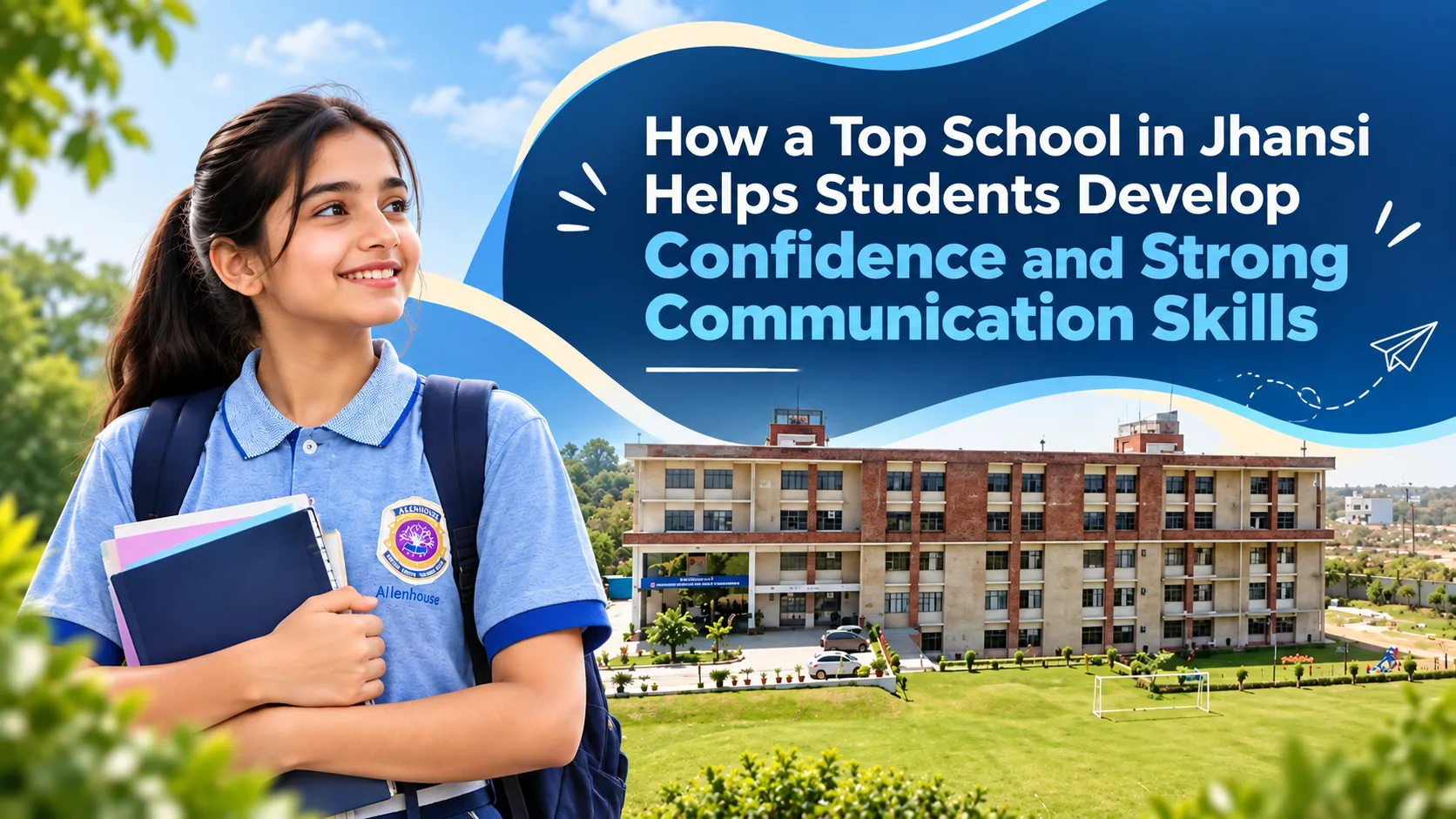
The best schools in Jhansi build student confidence and communication skills by creating a supportive culture. They balance discipline with empathy and encourage open collaboration. There is participation in events, projects, classroom discussions and more.
Introduction
The shy seven year old sitting silent through a question is not stuck that way forever either. No one wakes up being a confident twelve year old who can host a school assembly by accident. At Allenhouse Public School, Jhansi, this growth is woven into the fabric of the normal school day, not saved for a once-a-year event. Parents often want to know what it is that turns a quiet child into one who puts a hand up voluntarily and the honest answer is that it never comes down to one activity. This is what happens when classroom habits, time on stage, sport, the arts and simple things that parents do at home all pull in the same direction. Read ahead for what a parent can realistically expect to see change over a year when they pick a top school in Jhansi.
Why Confidence and Communication Skills for Students Matter Early
Students who participate in class are more likely to seek help earlier, bounce back from a wrong answer and not freeze when faced with an unfamiliar situation. In general, poor communication during the early years tends to show up again as a lack of willingness to participate and exam anxiety when middle school rolls around.
Saying an idea out loud forces a child to actually understand it, in a way that writing the answer down silently does not
The confidence a student builds in Class 3 or 4 is what shows up later in a Class 9 group project or a Class 10 board exam interview
Fluency in English is not the same thing as communication. A child can be clear and confident in Hindi first, then carry that same clarity into English
How Classrooms Make Room for Every Student to Speak
Five students answering every question in a room is not confidence-building, it is just repeating who already had confidence to begin with. Lessons at a top school in Jhansi are structured so participation is not left to whoever happens to volunteer.
Through the week, teachers call on students by roll number rather than only taking raised hands
A discussion starts in pairs before it ever happens in front of the whole class, giving a student a rehearsal before the real thing
When an answer is wrong, the class works through it out loud instead of moving on quickly, so a mistake reads as part of the exchange rather than the end of it
Sections stay small enough that a teacher picks up on a student who has gone quiet within the week rather than waiting until the term ends
How Stage Exposure Builds Confidence at Allenhouse
Facing an audience is a learned skill and skills need repeated practice, not a single yearly function to hang the whole effort on. Special assemblies, Sports Day and the celebrations built around national and international festivals give students that repetition all year, not just once.
Hosting the morning assembly rotates through every class, so a student who has never touched a microphone gets a first attempt with little at stake
Roles in festival and cultural programmes, whether speaking, dancing or performing, rotate too, instead of falling on the same few names each time
Stage events sit spread across the calendar rather than bunched around the annual day, giving nerves time to settle between one appearance and the next
How Debate, Elocution and Quiz Activities Sharpen Communication
Delivering a rehearsed speech and answering on the spot draws on different muscles and a student needs both. At a top school in Jhansi, debate and elocution train a student to build an argument, while quiz rounds train them to think and answer within seconds.
Arguing a debate position a student may not personally agree with builds the ability to reason clearly under pressure
Elocution work centres on pace, pause and eye contact, well beyond simply memorising a script
Quiz rounds reward a quick answer even when a student is not fully sure, which teaches them that a hesitant guess beats staying silent
How Group Projects Build Collaborative Communication
Where a debate or a speech puts one student in front of the room, a group project works differently. It asks a student to negotiate, split up the work fairly and speak up the moment a plan stops working, a form of communication most classrooms do not give enough credit to.
Presenting a group science or social studies project rotates too, so the same confident student is not always the one who reports back
Disagreeing with a group member's idea without shutting down the conversation is a harder skill than simply agreeing and it gets practised here
A student who struggles to find words in a debate often manages to raise a concern far more easily inside a small group of four or five first
How Sports and Physical Activities Build Self-Belief
Confidence building in students can also happen on fields. Confidence earned on a court or a field goes into a classroom more directly than most parents assume. A sports programme spanning swimming, basketball, yoga and Malkhamb gives a student room to fail, adjust and get better without any academic stakes attached to it.
A term spent improving a swimming stroke teaches a student what steady practice actually feels like, a lesson that transfers to a hard subject later on
Team sports such as basketball or football require calling out to a teammate mid-play, which is its own kind of communication under pressure
A Malkhamb or yoga performance asks a student to hold focus in front of watching eyes, not far removed from what a stage speech demands
How Music, Dance and Art Give Quieter Students a Voice
Public speaking is not the only route to confidence and nobody here assumes it has to be. Music, dance and art classes give a quieter student a way to be noticed and heard that does not depend on talking at all.
A Western or Indian vocal recital builds the same stage presence a debate does, just by a different road
Explaining a piece of Madhubani painting or clay modelling to classmates and teachers is communication anchored in something a child actually made
A student who stays guarded during discussion will often open up first in a dance rehearsal or a music class and that ease tends to spread outward from there
How Teachers Support Students Who Are Shy or Hesitant
A shy child does not belong on a stage in the first week and nobody here expects that. Teachers watch for a student avoiding eye contact, answering only when asked directly, or going quiet during group work and they step in rather than waiting for the child to close the gap alone.
Personalised counselling gives a hesitant student a private space to talk before anyone asks them to talk in front of classmates
Early group tasks pair a quieter student with someone supportive, not with the loudest voice in the room
Small private wins, like getting one answer right in a small group, come well before any bigger stage moment is asked of them
How Parent-Teacher Meetings Track a Child's Progress
Confidence rarely shows up on a report card, so this conversation does not wait for exam results. Parent-teacher meetings, held four times a year, cover how a child is taking part, not just how they are scoring.
Teachers point to specific classroom moments, such as a child answering unprompted for the first time, rather than offering a vague comment
Parents leave knowing what to watch for next, so home and school are pulling in the same direction
If a student who was confident earlier in the year suddenly goes quiet, that gets flagged straight away instead of at the next report card
What Parents Can Do at Home to Support This Growth
School lays down the habit, but a child rehearses it most in ordinary conversation at home, not through formal exercises.
Ask for the full story of the school day rather than settling for one word
Let your child place their own food order or ask a question to an adult when you are out together, instead of speaking on their behalf
Praise the attempt itself rather than a polished or correct answer alone. A child praised only for getting it right stops trying the answers they are unsure of
Conclusion
For parents looking at a top school in Jhansi that treats confidence and communication as part of the curriculum rather than an add-on, this is where that balance lives. Stage events, sport, debate, music and art all run through the year here and each one opens a different door to the same result: a child who can speak up, hold a position and recover after a stumble in front of others.
This carries across every age group, not just one stretch of school life. A Class 2 student rehearsing a two-line assembly speech and a Class 10 student defending a position in a debate round sit on the same continuum rather than belonging to two separate programmes. That continuity is what eventually turns a hesitant six-year-old into a Class 12 student who can sit through a college interview without rehearsing every line in advance.
Your Queries Answered
1.How does top school in Jhansi build confidence in young children?
Through exposure that repeats and stays low-pressure, rather than one big event a year. Assembly hosting moves through every class, group discussion gets rehearsed in pairs before it happens publicly and stage events are spread across the year instead of saved for the annual function.
2.Does a child need to be good at English to build strong communication skills?
No. Communication and fluency in English are two different things. A child can be clear and confident in Hindi first and that clarity travels into English with practice.
3.What if my child is naturally shy and avoids speaking in class?
Nobody pushes a shy child onto a stage right away. It starts with private counselling, paired group work and small wins in the classroom, letting stage confidence build up in stages instead of all at once.
4.How do sports and arts activities connect to communication skills?
Team sports call for shouting to a teammate under pressure and a music, dance or art performance builds the same stage presence a debate calls for, just through a different activity. A quieter child often discovers their voice here first.
5.How can parents track their child's progress in this area?
Parent-teacher meetings happen four times a year and teachers bring specific classroom moments rather than general remarks, flagging any drop in participation early instead of waiting until the next report card.