How a Modern School in Jhansi Prepares Students with Coding and Robotics Skills
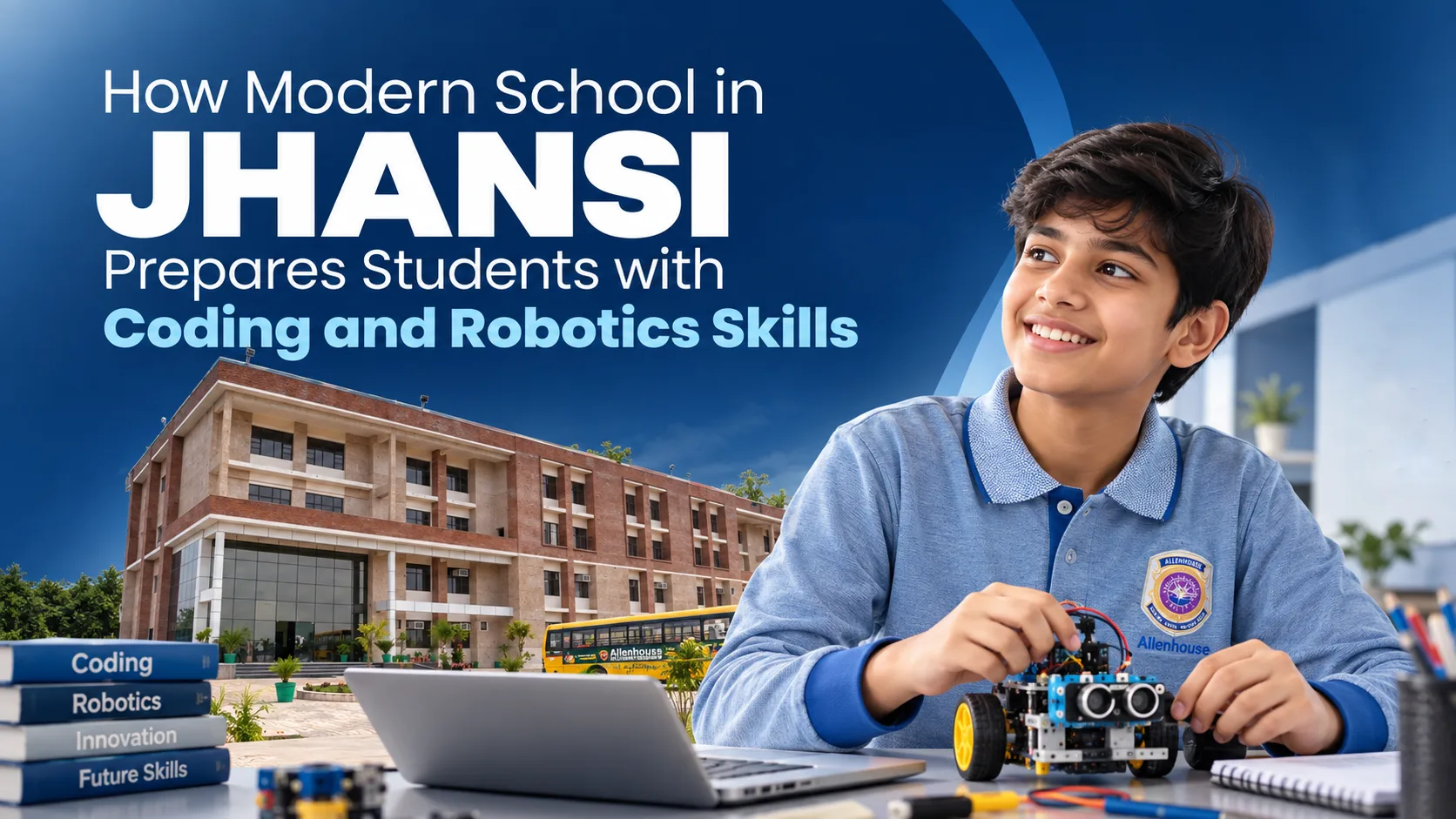
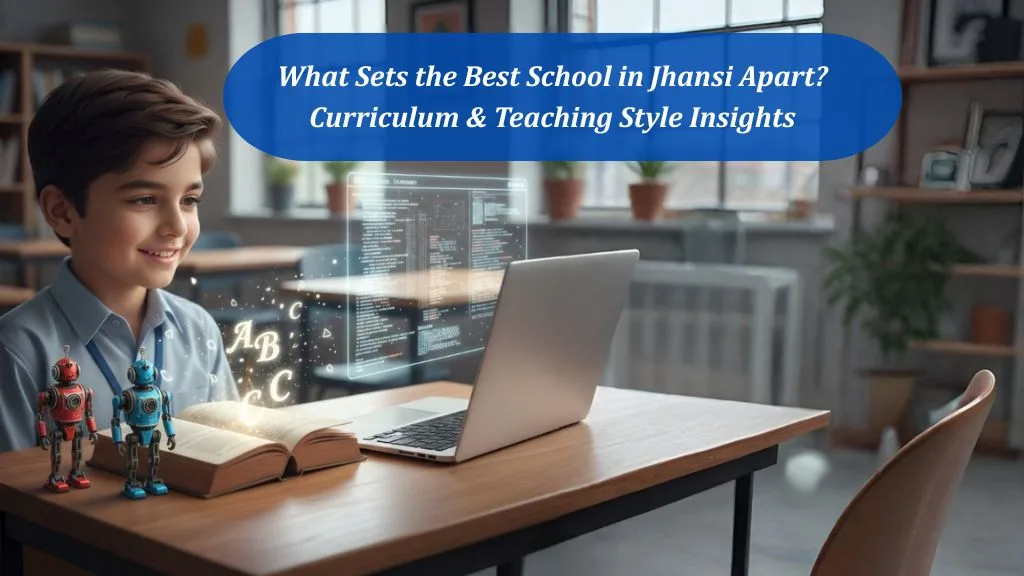
A modern school in Jhansi introduces coding and robotics in a simple, hands-on way to help students prepare for a technology-led future. Coding builds logical thinking as well as problem-solving. Robotics takes those ideas off the screen and lets students build and test something they can actually see and touch.
Introduction
The quiet hum of motor drivers and the rhythmic click-clack of laptop/desktop keys have officially replaced the monotonous chant of rote learning at modern schools in Jhansi. When ten-year-old Ananya clicks "Run," her handmade wire-and-plastic robotic arm sweeps across the desk to pick up an eraser and neatly drop it into a bin. It took her four failed attempts and a tricky loop revision to get the timing right.
Here’s getting straight into how modern schools make this possible and why it is important.
What Are Coding and Robotics Skills? Why Are They Important for School Students?
Coding and robotics are tech skills that show students how to give instructions, fix problems and build stuff that actually works. Coding trains your brain to think logically and break things down step by step. Robotics takes those same ideas and makes them real. In it, you're working with machines, sensors, motors and getting programmed actions to happen in front of you. The payoff goes way past just learning a programming language. Students pick up:
Logical reasoning - They learn to connect ideas and spot what follows from what.
Computational thinking - They get comfortable breaking big problems into smaller, manageable chunks.
Problem-solving - They figure out how to tackle obstacles instead of freezing up.
Creativity - They come up with new ways to make things work.
Teamwork - They learn to build stuff together and split up the work.
Planning - They map out steps before jumping in blindly.
Decision-making - They choose between options and own the results.
Coding also makes failure feel okay. A student writes some instructions. Something breaks. They dig through the code, spot what went wrong and give it another shot. That back-and-forth teaches them to keep going. Robotics makes the whole thing even more real. Kids can actually watch their code make a robot move, stop, turn, or react to what's around it.
At What Age Should Students Start Learning Coding and Robotics?
Kids can start when the activities match where they're at developmentally. Younger children can begin with patterns, sequencing and simple block-based coding. Older students can gradually shift into actual programming, sensors, automation and trickier robotics projects. The learning path can move in stages:
Primary years- Patterns, sequencing, logic and visual coding - They spot repeating shapes and put steps in order before touching any real code.
Upper primary- Block-based programming and simple projects - They drag colourful blocks around to make characters move or games respond.
Middle school- Programming concepts, sensors and robotics parts - They start writing actual instructions and wiring up basic hardware.
Secondary school- Advanced coding, automation and engineering projects - They build systems that run on their own and solve real problems.
Starting young doesn't mean parking little kids in front of heavy programming lessons. The right approach keeps it light at first. As kids get more comfortable, the challenges can grow with them.
What Do Students Learn in a School Coding and Robotics Programme?
A school coding and robotics programme teaches kids how to think through a problem. They learn to write instructions and turn those instructions into something that actually runs. It is a structured programme at modern schools that allows students to learn algorithms and programming as well as the concepts of debugging, sensors, motors and automation while also building creativity, teamwork and problem-solving skills. A structured programme might cover:
Algorithms and sequencing - They learn to lay out clear step-by-step plans before writing any code.
Computational thinking - They practise breaking messy situations into logical pieces.
Block-based coding - They build programmes visually without worrying about syntax early on.
Text-based programming - They move on to typing real code once the concepts stick.
Variables and logic - They store information and make programmes decide what to do next.
Debugging - They hunt down errors and fix them without giving up.
Robotics fundamentals - They understand how robots are built and what makes them tick.
Sensors and motors - They connect hardware that reads the world and moves in response.
Automation - They create systems that handle tasks without constant human input.
Project development - They carry an idea from rough sketch to working prototype.
What exactly gets taught should depend on the kid's age and experience. A primary school in Jhansi might start with visual coding, simple games or sequencing activities. Older students can gradually move towards more advanced programming as well as robotics. The key is progression. Students should feel like each new lesson builds on something they already get.
How Does a School Teach Coding and Robotics to Beginners?
Schools can introduce coding and robotics to beginners through simple ideas and guided activities. It starts small with simple hands-on projects. Kids start with visual coding and basic challenges before moving into programming or hardware and more complex robotics. The goal is to make tech feel approachable. Beginner-friendly learning might include:
Simple sequencing activities - They put actions in order before any code appears.
Drag-and-drop coding - They snap blocks together to see instant results.
Basic programming challenges - They solve small puzzles that teach one concept at a time.
Guided robotics tasks - They follow steps to make a robot do something specific.
Small group projects - They split up roles and figure out how to work together.
Trial-and-error activities - They test freely and learn from what goes wrong.
Teacher demonstrations - They watch first, then try it themselves with support nearby.
Debugging exercises - They deliberately break and fix code to understand how it works.
The classroom also needs to make room for mistakes. A kid should be able to try something, get it wrong, and go at it again, that's half the point of learning to code. With robotics, the feedback is instant and hard to miss. Students watch their instructions play out in front of them, and when something doesn't work the way they expected, they can trace back and figure out where it went off track.
What Projects Can Students Build While Learning Coding and Robotics?
Students can build projects that match where they are - simple animations and basic games at one end, sensor-driven robots and automated models at the other. Project work gives kids something real to point at and say, "I made that." And along the way, they're picking up planning, testing, debugging, and teamwork without it feeling like a lesson.
Projects might include:
Interactive stories - They code tales where the reader clicks to change what happens next.
Simple animations - They make characters move, bounce, or transform on screen.
Basic educational games - They build quizzes or puzzles that teach something back.
Line-following robots - They programme robots to trace a path using sensors.
Obstacle-avoiding robots - They create machines that steer around whatever blocks their way.
Sensor-based models - They build gadgets that react to light, sound, or touch.
Automated systems - They design setups that handle repetitive jobs on their own.
Interactive displays - They make installations that respond when someone walks by.
The finished project is only part of the story. Students also have to figure out what they want to build. They need to map out the steps, test their ideas and fix problems as they pop up. That process is where most of the real learning happens.
How Does Coding and Robotics Education Compare With Traditional Computer Classes?
Coding and robotics education focuses on creating, programming and solving problems, while traditional computer classes often focus on using software and digital tools. Both are useful, but coding and robotics give students more opportunities to understand how technology works and create something of their own.
The difference can be understood simply:
How Can Parents Choose the Right School Coding and Robotics Programme?
Parents can choose a strong school coding and robotics programme by looking at what happens beyond the brochure. The curriculum, teacher expertise, hands-on learning, equipment, student projects and progression across grades all matter. The most useful question is simple: what do students actually learn and build?
Parents can ask:
What programming concepts are taught?
At what age does coding begin?
How much time do students spend on projects?
Do students work alone or in teams?
What equipment is available in the robotics lab?
What projects have students completed?
Does the programme become more advanced each year?
Can students participate in competitions?
Are teachers trained to teach coding and robotics?
A robotics lab can look impressive. But having a lab is not the same as using it well. Parents should ask to see examples of student projects. If possible, they should also understand what a typical coding or robotics class looks like.
Is Coding and Robotics Suitable for Every School Student?
Coding and robotics can be suitable for most students when the learning is age-appropriate and supportive. Children do not need to know programming before they begin. Curiosity, patience and a willingness to experiment are often more useful starting points than advanced technical knowledge. Not every child will enjoy coding in the same way. One student may love writing code. Another may prefer building the robot. Someone else may enjoy designing the project or presenting it to the class.
A good programme can make room for these differences through:
Beginner-friendly instruction
Different levels of difficulty
Hands-on activities
Individual guidance
Team projects
Opportunities to explore personal interests
Coding and robotics should spark curiosity, not become another source of pressure.
Conclusion
Coding and robotics can teach students much more than programming. They can teach children to break a big problem into smaller ones. To test an idea. To find a mistake. And to keep trying when the first solution does not work.
For a primary school in Jhansi, that journey can start with simple patterns, sequencing and visual coding. As students grow, they can move towards programming, robotics, automation and more complex projects.
For parents searching for a trusted CBSE school near me in Jhansi, coding and robotics can be one useful factor when evaluating a school's approach to future-ready learning. Academic strength, teaching quality and student support matter just as much.