
Screen Time vs. Green Time 2025: Ultimate Guide for Students
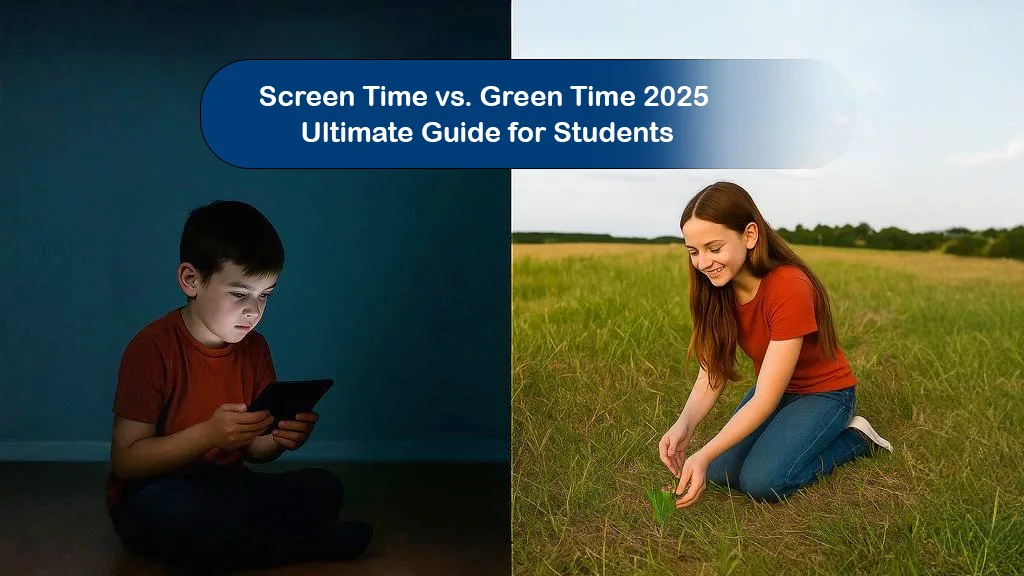
When did your child last choose a football instead of a phone? In 2025, this is a more important question than ever. With online schooling, streaming programs, and the regular scroll of social media, screen time has become a pervasive companion to the majority of students. But here's the truth: while technology connects, entertains, and teaches, it can quietly take away another important part of childhood: green time, the time spent outdoors, moving, playing, and enjoying fresh air.
So how do we achieve a healthy balance between the two? Let's discuss why this balance is important, how social media is a factor, and what parents and teachers can do to ensure students receive the best of both.
The Rise of Screen Time in Students' Lives
It's no surprise that screen time has grown over the last decade. From interactive learning platforms to multiplayer online games, technology has become a central part of a student's daily routine. According to a few searches, students spend an average of 6–8 hours per day on screens, by watching entertainment and social media things.
For most parents, this change is uncertain. Yes, technology provides students with a universe of information and imagination, but it also weakens time for physical play, outdoor exploration, and face-to-face friendships. The more screen time prevails, the less green time becomes an afterthought. This is why the debate of Screen Time vs. Green Time 2025 is more crucial than ever.
Green Time: Why Outdoor Play is Irreplaceable
Green time is not just playing outside. It's a builder of physical well-being, emotional stability, and social competence. Playing in a park, riding a bike in the neighbourhood, or nurturing a small garden provides students with experiences that no screen can equal.
Studies prove that spending a minimum of one hour per day outdoors:
Enhances concentration and memory.
Makes muscles and coordination stronger.
Lower levels of stress and anxiety.
Fosters social skills by promoting teamwork and group play.
In brief, green time powers a healthier body and a happier mind, something that every student needs to do well in today's fast-moving, tech-saturated world. That’s why Screen Time vs. Green Time has become a defining choice in every student’s daily life
The Effect of Screen Time on Preschool Children
The computers and phones are interesting, yet excessive screen time has unwanted effects:
Brain Growth: Regular growth is impacted by screen time in the sense that children lose fewer opportunities to learn through hands-on activities and therefore problem-solving and motor skills are delayed.
Social Interaction: Gadgets' addiction impacts group communication, and this is crucial for interpersonal growth.
Sleep Disturbance: Lights from screens are more problematic because the blue part of the spectrum disrupts individuals' ability to sleep properly, which causes mood and concentration dysregulation.
Therefore, in relation to screens, it is not a bad thing because moderation in children's use of screens minimises such issues. Parents must rethink Screen Time vs. Green Time when raising younger children.
Screen Time vs. Green Time: Maintaining the right Balance
Maintaining the balance between green and screen time is really challenging but possible by following some strategies. Here are effective strategies for parents and teachers:
Establish Clear Daily Limits
Use applications or your phone's built-in features to monitor and set screen time limits for relaxation. Keep non-educational screen time to no more than 2 hours per day.
Incorporate Green Time Daily
Make green time non-negotiable. Plan it like homework, a walk, practice with sports, or just outdoor play.
Tech-Free Zones and Times
Create screen-free areas, such as the dining table or bedroom, and times, such as the first hour of each day.
Bring Nature into Learning
Rather than teaching only indoors, integrate outside projects, such as science experiments in the yard or artwork based on nature scenes.
In short, Screen Time vs. Green Time is not about removing one for the other—it’s about creating harmony.
How Schools Can Maintain the Balance between Both
Schools have a significant role in promoting green time. Schools can:
Plan outdoor games and activities based on nature.
Create eco-clubs that include planting trees or picking up local parks.
Eliminate unnecessary screen time in school.
Encourage physical education in addition to digital literacy.
By blending both digital resources and outdoor activities, schools equip students for a balanced life. Screen Time vs. Green Time 2025 is not just a family challenge but an educational one too.
The Long-Term Advantages of Balanced Time
When students find that perfect Balance between screen time and green time, they experience:
Improved physical health- enhanced immunity, endurance, and energy.
Improved mental health- less anxiety and improved mood stability.
Improved creativity - nature stimulates imagination in ways that screens cannot.
Improved relationships - both online and off.
This balanced strategy makes sure that they're not only technologically smart but also emotionally and physically right.
Conclusion
By 2025, technology will continuously get more advanced day by day. However, the Screen Time vs. Green Time 2025 problem isn't the one of our generation facing it will continue further. That’s why we have to prepare our children digitally literate.
Parents, teachers, and students themselves can create a world in which outdoor experiences exist with virtual skills. After all, a student who can find their way on both the internet and a hiking path is ready for anything.
So the next time your kid picks up a phone, why not give them a basketball as well?