CBSE Exam Rule Changes 2026: Easy Guide to New Rules and Pattern
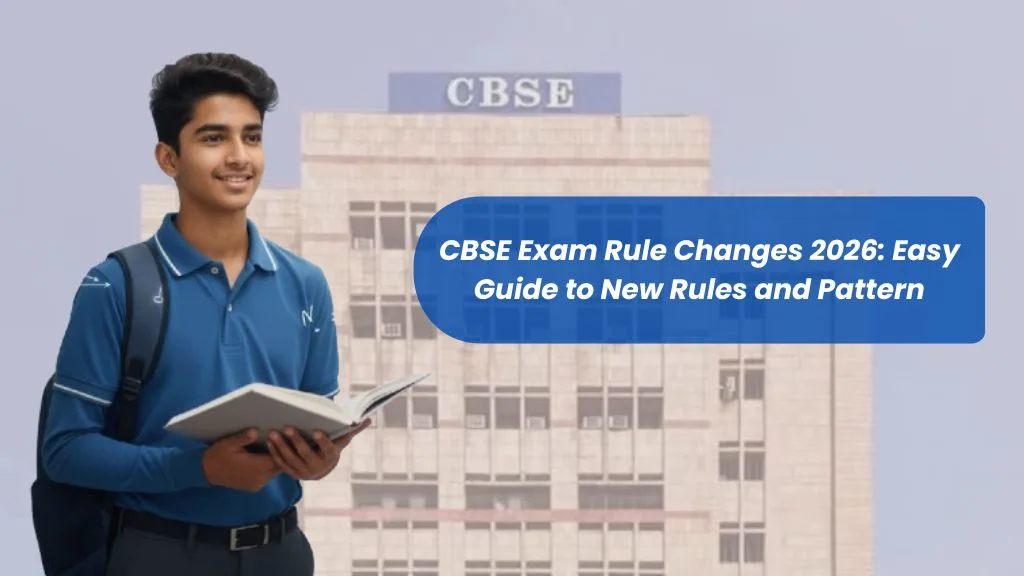
If you are a parent or a student of CBSE, then you would have surely heard about the CBSE Exam Rule Changes 2026. CBSE has made some significant changes to simplify exams, make them more practical. These changes are made to minimize stress and help students learn instead of just memorizing. In this blog, we shall discuss the new rules and exam pattern in simple words.
Why CBSE Revised the Rules?
Previously, students used to feel that exams were too much stress on marks and rote learning. CBSE also wanted students to learn concepts more clearly and implement what they learn practically. That’s why they have revised the exam pattern under the CBSE Exam Rule Changes 2026. The primary objective is to make learning interesting, minimize pressure, and enhance overall knowledge and competence.
Major Changes in CBSE Exam Rules 2026
Here are the key CBSE Exam Rule Changes 2026 you should be aware of:
1. Two-Exam System
One of the most significant changes is two main exams in a year for every subject. Previously, there was a single final exam. Now, students will have:
Exam 1 (Formative Assessment) – It will be administered mid-year and tests students' understanding of what they learn. Moreover, there will be more straightforward questions and emphasis on comprehension.
Exam 2 (Summative Assessment) – The last exam towards the end of the year and will cover the whole syllabus but with questions written for understanding rather than memorization.
This two-exam process will lower stress from exams and provide students with more opportunities to score better.
2. Reduced Syllabus
CBSE has carefully reduced the syllabus for every class. Students will not be required to study additional topics that are less important. Rather, they can concentrate on learning things correctly and relishing the subject. This is one of the CBSE Exam Rule Changes 2026 to make exams more meaningful.
3. Practical and Application-Based Questions
Another significant difference is that questions will be more practical and related to real life. For instance, in mathematics, rather than just doing sums from the book, students might need to apply math in solving problems of everyday life. Questions in science might require students to describe simple experiments or observations. This is done to make students able to solve problems.
4. Internal Assessments
CBSE has made internal assessments significant. This implies that your performance in class activities, projects, and assignments will be taken into account in final marks. Systematic participation and learning in class will matter more, not merely the score in the final exam. This change under the CBSE Exam Rule Changes 2026 encourages consistent effort throughout the year rather than last-minute preparation.
5. Focus on Skill Development
With the new regulations, CBSE would like students to enhance life skills as well as book knowledge. Communication skills, critical thinking, creativity, and collaboration will be more appreciated. Schools can make the development of these skills a part of the assessment.
6. Transparent Marking Scheme
The marking scheme is made easy so that students understand clearly how the marks are given. For instance, marks will be awarded for understanding, right steps, and presentation in every question. This transparency is one of the significant Primary-CBSE Exam Rule Changes 2026.
How Students Can Prepare for CBSE Exam Rule Changes 2026
Here are a few simple tips to help students prepare effectively:
1. Understand Concepts: Concentrate on comprehending what you learn and not merely memorize.
2. Practice Regularly: Practice questions from textbooks, sample papers, and practical questions.
3.Time Management: Practice question-solving within the exam time limit.
4. Take Notes: Take minute notes while reading to revise quickly before examinations.
5. Participate in Class: Active class participation will assist in internal evaluations.
Conclusion
CBSE Exam Rule Changes 2026 are meant to enhance learning for effectiveness and less stress. With two exams, less syllabus, practical questions, and emphasis on skill development, students are now free to learn and excel in exams. Parents and teachers must aid the students to adjust to these adjustments by assisting them to learn to understand and practice.
These modifications are a step in the right direction of establishing a system where students study with confidence and interest, instead of running behind marks. Students can comfortably manage the new trend by studying well.